
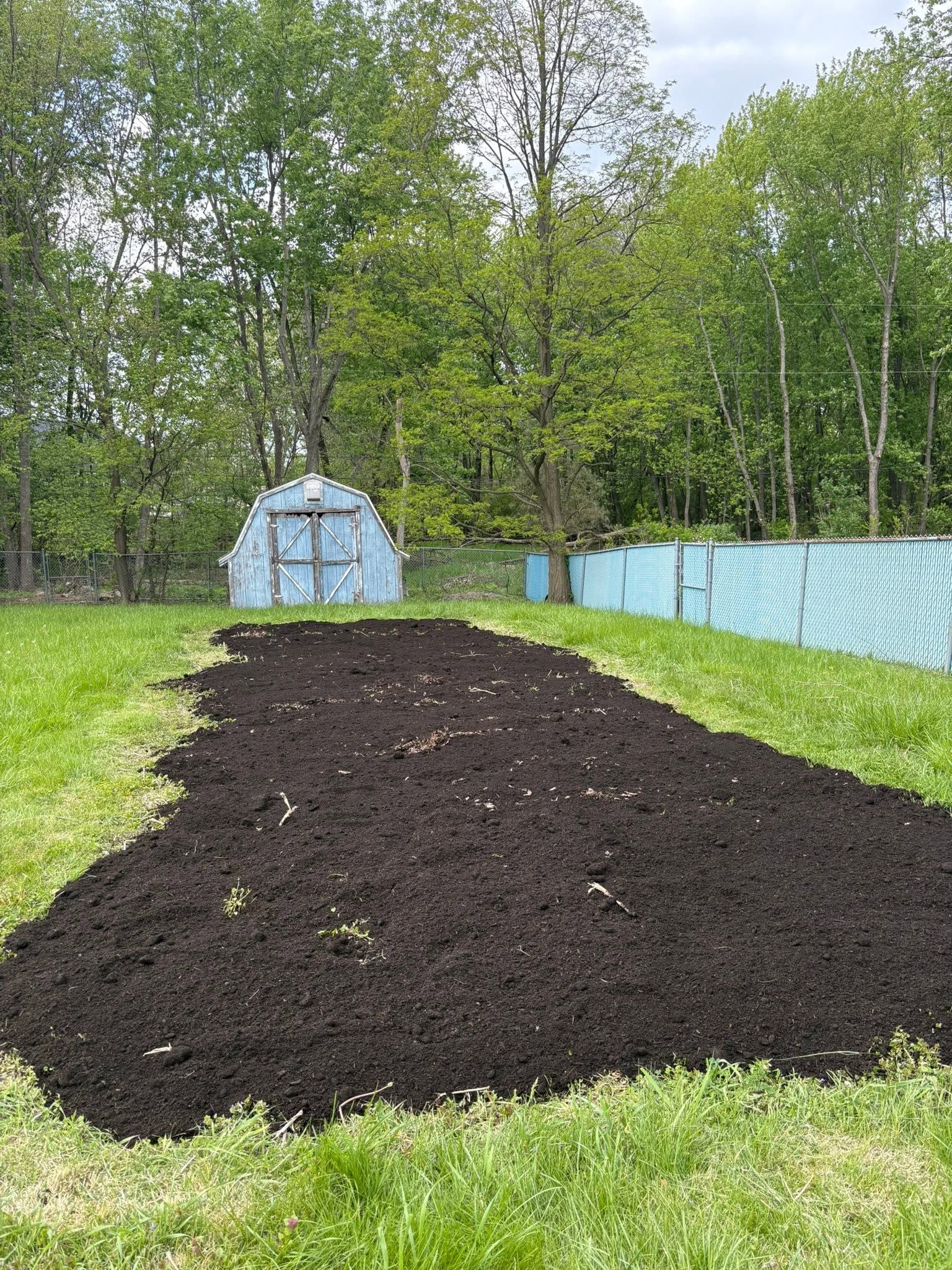
Grading That Moves Water Off Your Lot
Drainage & Grading Solutions in Crown Point for side yards and patio areas left uneven after construction
Subdivision lots are graded during the house build to meet municipal requirements, then left to the homeowner to address the soft spots and standing water that show up along side yards and behind new patios. The job starts by walking the property after a rain or running a hose test to see where water actually collects. LaReau & Nelson Outdoor Services regrades the affected areas to a consistent fall, and where needed installs catch basins, French drains, or downspout extensions tied to a proper outlet. The quote lists the regrading work, materials, and any trenching separately so you can see what each part of the fix costs.
Regrading involves scraping the surface to remove low spots, adding fill where needed, and sloping the area so water moves toward the street, a swale, or a drainage structure rather than pooling against the foundation. Where surface grading alone won't solve the problem, the crew installs catch basins at low points or trenches in a French drain with perforated pipe and gravel backfill that intercepts water below grade. Downspout extensions are run to daylight or tied into the drain system so roof runoff doesn't dump directly onto already saturated ground.
Schedule a property walkthrough to identify where water collects and discuss grading or drainage options for your lot.
What Regrading and Drainage Systems Do
Regrading creates a slope that directs water away from the house and off the property, eliminating the standing water and mud that form in low spots after rain. Catch basins collect surface water at the lowest point and channel it through underground pipe to an outlet. French drains intercept water below the surface before it saturates the soil and creates soft, unusable areas in the yard.
After the work is finished, you'll notice that water no longer pools along the side of the house or behind the patio, the yard dries out within hours instead of staying soft for days, and grass or plantings survive in areas that were previously too wet to support growth. Downspouts discharge away from the foundation rather than dumping onto the ground at the base of the house.
The work includes regrading, installation of drainage structures, trenching, pipe and gravel for subsurface drains, and connecting downspouts to the system. The quote does not include sod or seeding to restore lawn areas disturbed during grading, and does not cover work required to address drainage problems caused by municipal storm systems or neighboring properties unless those solutions are discussed and added to the scope.
Questions Before Starting Your Project
Property owners dealing with standing water and soft spots typically ask about how the drainage problems are identified and what the solutions involve.
How do you identify where water is actually collecting?
The crew walks the property after a rain or runs a hose test to observe where water pools, how long it takes to drain, and whether the problem is caused by surface grading, compacted soil, or inadequate drainage structures.
What does regrading involve?
The surface is scraped to remove low spots, fill is added where needed to raise the grade, and the area is sloped to a consistent fall that directs water toward the street, a swale, or a drainage outlet rather than allowing it to pool.
When is a French drain necessary instead of just regrading?
French drains are installed when water saturates the soil below the surface or when surface grading alone can't create enough slope to move water off the property, such as in flat side yards or behind retaining walls.
Where do catch basins and drain pipes outlet?
Outlets are chosen based on the lot's existing drainage path—typically to the street, a drainage swale, or a municipal storm inlet—and the pipe is sloped so water flows by gravity rather than backing up during heavy rain.
Why do newer subdivision lots around Hobart and St. John often have drainage problems?
Lots are graded during the house build to direct water away from the foundation, but contractors rarely finish-grade the side yards or areas behind patios, leaving uneven surfaces where water collects and creates soft spots that don't dry out.
LaReau & Nelson Outdoor Services also provides drainage and grading solutions in Schererville, Dyer, Merrillville, Hobart, and St. John. Request a site walkthrough and a detailed estimate that separates regrading, materials, and trenching costs for your property.