
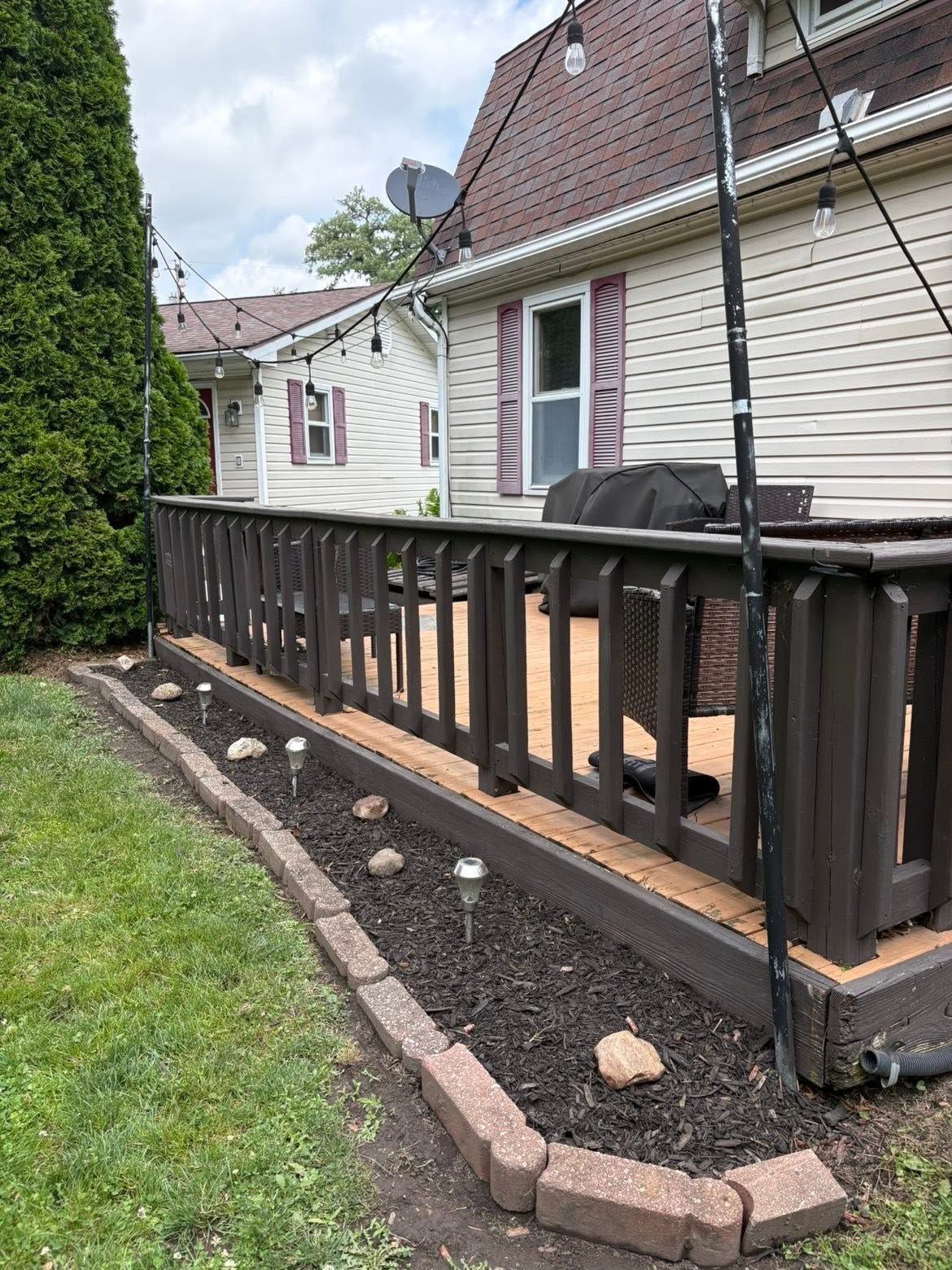
Patios Built on Proper Base
Custom patio and paver installation in Crown Point for backyards where layout has to fit between fences, utilities, and tight property lines
Backyard patios in suburban subdivisions around Crown Point and Schererville often sit on modest lots where the usable space is squeezed between the house, side fences, and buried utility lines. LaReau & Nelson Outdoor Services plans the layout around how the patio will actually be used: clearance for furniture, access to the lawn or gate, and spacing from HVAC units or downspouts. The base is excavated deep enough for a compacted gravel layer, pavers are set level with a bedding layer, and edge restraints hold the joints tight so the surface does not creep or settle unevenly. The quote itemizes excavation, base material, pavers, and edging so you see the cost of each layer before the work starts.
Excavation depth depends on soil type and drainage, but most installations remove eight to ten inches of soil, replace it with compacted gravel in lifts, then add a leveling layer of sand before the pavers are laid. Edge restraints are spiked into the base along the perimeter to prevent the pavers from shifting outward over time. Joints are filled with polymeric sand that locks the surface together once activated with water.
Arrange a site visit to review your backyard layout and discuss paver options before the design is finalized.
How the Installation Holds Up
The base is what determines how long a patio lasts. Proper compaction prevents settling, and a thick gravel layer allows water to drain through rather than pooling under the pavers. Each lift of gravel is compacted separately with a plate compactor, and the bedding sand is screeded level so the pavers sit uniformly across the surface.
LaReau & Nelson Outdoor Services builds each patio with the same attention to base preparation and edging, ensuring the finished surface stays level and the joints remain tight. Once complete, the patio drains quickly after rain, furniture sits without rocking, and the edges stay fixed even along high-traffic zones near doors or gates.
The installation includes excavation, base preparation, paver laying, edge restraint, and joint sand. Grading adjustments, retaining walls, or step transitions are quoted separately if the lot requires them.
Answers About the Work
Homeowners planning patio projects often ask about the process and what affects the final result.
What determines the depth of excavation?
Depth depends on the thickness of the base layer needed for drainage and stability, typically six to eight inches of compacted gravel plus one inch of bedding sand, plus the paver thickness itself.
How are pavers chosen for a specific layout?
Paver selection considers size, color, texture, and how the pattern fits the space; larger pavers work better for open areas, while smaller units handle curves and tight corners more easily.
What happens if the patio sits on a sloped yard?
The base is graded to maintain a slight slope away from the house for drainage, and the patio surface follows that grade, or a retaining wall is added to create a level platform if the slope is too steep.
How long does a paver patio last in Crown Point?
A properly built base with compacted gravel, edge restraint, and polymeric sand joints can last decades without major settling or joint separation, even through freeze-thaw cycles.
What do you notice once the patio is finished?
The surface is level and stable underfoot, water drains toward the lawn or a designated low point, and the paver joints stay tight without weed growth or sand washout.
LaReau & Nelson Outdoor Services also installs custom patios and pavers in Schererville, Dyer, Merrillville, Hobart, and St. John. Request a free itemized quote to review your backyard layout and paver options.